In the days after the second of August in 216 BC, a Carthaginian quartermaster collected several bushels of gold rings from a battlefield in southern Italy and packed them onto a donkey to be sent to Carthage. The rings had come from the fingers of dead Roman knights, of whom there were several thousand. They were intended as proof. The rumours arriving in Carthage were of a slaughter on a scale not previously believed possible, and Hannibal Barca, the thirty-year-old commander whose army had done the slaughtering, had decided that proof was needed.
The slaughter is now called the Battle of Cannae, and it is the most thoroughly studied military disaster in Western history. By the end of one summer afternoon, somewhere between fifty and seventy thousand Roman soldiers were dead. Their bodies covered an area smaller than a modern football pitch and a half. Their senior commander, the consul Lucius Aemilius Paullus, was killed at the centre of the line. The other consul, Gaius Terentius Varro, fled with the cavalry. The Roman army had been the largest the Republic had ever fielded.
This is the fifth piece in a series I'm calling "One Great Insight". The first four were Debord, Bulgakov, Wittgenstein and Camus. This one is Cannae, and it is about something most political histories prefer not to dwell on: that the most expensive arguments in any society are the ones that society has with itself. The bodies on the field at Cannae were paid out, mostly, by an argument Rome had been having internally for two years. Hannibal was the bailiff arriving to collect.
Who was Hannibal?
He was the son of Hamilcar Barca, the Carthaginian general who had fought Rome to a standstill in the First Punic War and then watched, helplessly, as Carthage made a peace that gave Rome Sicily, Sardinia and Corsica. Hamilcar took his nine-year-old son to a temple in Carthage and made him swear an oath of eternal hostility to Rome. The boy kept the oath for the rest of his life.
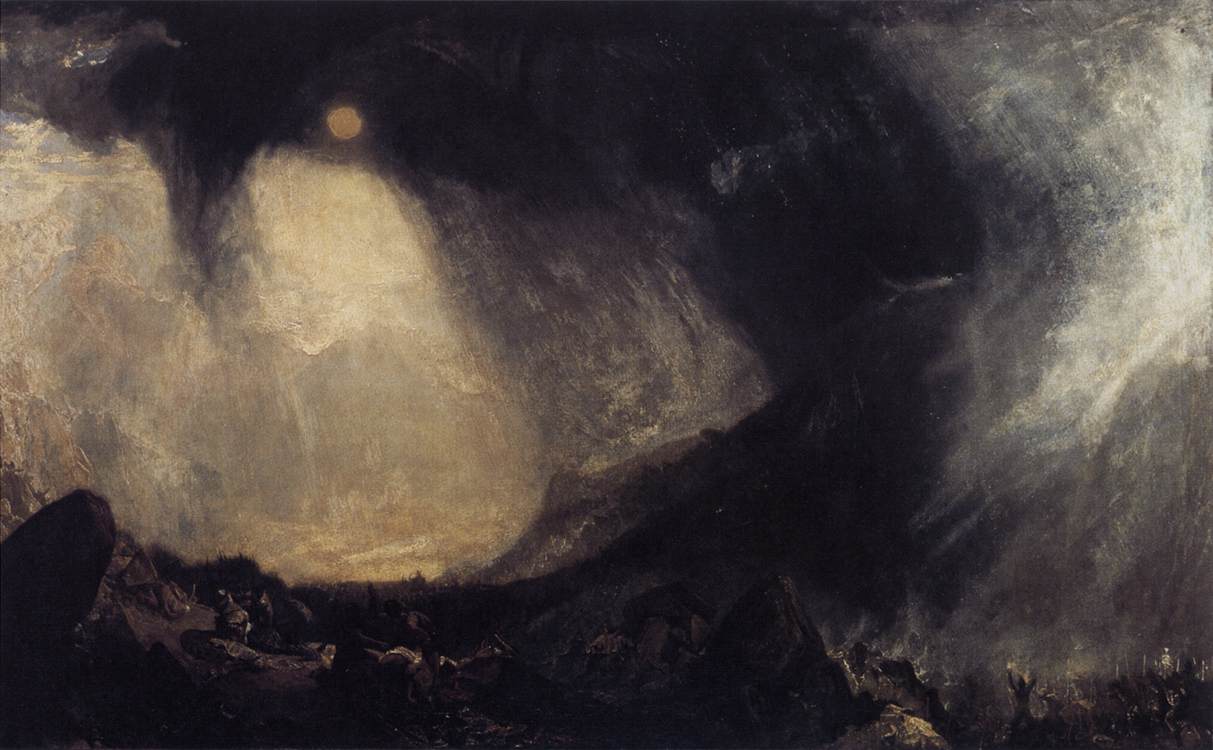
By twenty-six Hannibal was commanding the Carthaginian army in Spain. By twenty-eight he was crossing the Alps with thirty-seven elephants and forty thousand men, having walked his army from the south of Spain through the Pyrenees, across the Rhône, and over a mountain pass nobody had successfully crossed with a force that size before. He lost most of the elephants and a third of the army on the way. The Roman army that came up to block him at the Trebia in December of 218 BC was bigger and rested. He destroyed it. Six months later, at Lake Trasimene, he ambushed a second consular army in the morning fog and destroyed that one too. Both consuls in command had been killed. Sixteen thousand Romans had died in a single morning.
This was the situation Rome faced in the early summer of 217 BC. A Carthaginian general, in his late twenties, had crossed the Alps, won two engagements in succession, killed two consuls, and was now moving freely through northern and central Italy with no Roman army in a position to engage him.
Rome did the only thing the Republic's emergency procedures allowed. It appointed a dictator.
Fabius
Quintus Fabius Maximus Verrucosus was in his sixties, a patrician of an old family, slow of speech, deliberate of manner, and famous for losing fights as a boy in such a measured way that nobody could find a clear opening to insult him. He had been a consul twice already. He was given the dictatorship in the immediate panic after Trasimene with a six-month mandate to deal with Hannibal.
Fabius's strategy was to refuse to fight Hannibal.
Not to retreat from him. Not to ignore him. To shadow him, on parallel lines, on high ground where the Carthaginian cavalry could not be deployed effectively. To attack the foragers and the supply trains and the small detachments. To deny him the open battle in which his tactical genius did its damage. To accept, with patience, that Hannibal's army was an expeditionary force in hostile country with no resupply and no friendly base of substance, and that if Rome simply did not give him the engagement he wanted, time was on the Republic's side.
The strategy was correct. It is so well-attested as correct that it has its own English adjective, Fabian, used now for almost any patient long-term campaign that refuses the frontal assault. The Roman public hated it.
The hatred is documented. They called Fabius "Hannibal's lackey", because his army shadowed the Carthaginians at distance like a tutor. They coined the nickname Cunctator, the Delayer, intended as a slur. His own Master of Horse, a man called Marcus Minucius Rufus, openly defied him in the field and was rewarded for it by the Roman Senate, which elevated Minucius to co-dictator under the unprecedented arrangement of two co-equal commanders. Minucius then promptly walked his army into a Hannibalic ambush, was rescued by Fabius, and resigned his co-dictatorship in shame. The Senate did not learn the lesson.
When Fabius's six-month mandate expired in late 217 BC, the Republic did not extend it. They went the other way.
Cannae
For the campaign of 216 BC, Rome appointed two consuls and built them an army the like of which the Republic had never put in the field before. Eighty thousand men. Lucius Aemilius Paullus, the patrician of Fabius's faction, the cautious one. Gaius Terentius Varro, the plebeian, the popular candidate, the bold one, the one the public wanted. Roman emergency procedure required the consuls to alternate command on alternate days. The bold one and the cautious one would take turns.
This is not a strategy. This is a stalemate.
Hannibal moved south in early summer to the heel of Italy, taking a small Roman supply depot at a village called Cannae and pinning his army on the Aufidus river in low, hot, dusty country. The Roman force followed and made camp opposite. For most of July, the two consuls argued. Aemilius Paullus, looking at the ground (open, flat, advantageous for cavalry, of which Hannibal had more), wanted to delay. Varro, looking at the size of his own army (twice the Carthaginian force) and at the political pressure to give the public a victory, wanted to fight. They alternated commands. They did not alternate strategies.
On the morning of the second of August, the day was Varro's. He gave the order to engage.
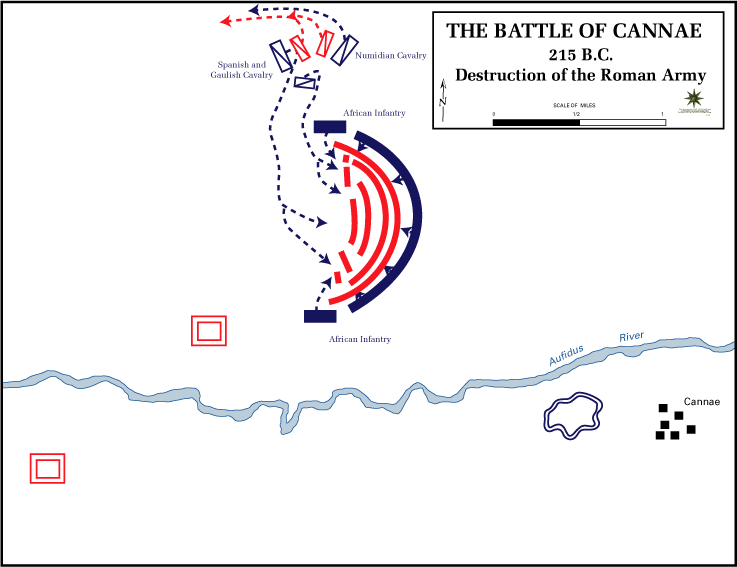
Hannibal had drawn up his line with a forward bulge in the centre, his weakest infantry pushed out toward the Romans, his strongest African veterans held back on the wings. The Roman legionaries, eighty thousand men ten ranks deep, advanced in the standard manner and pushed into the bulge. The bulge gave way. The Roman centre, as planned, drove forward into a contracting space. The African wings closed in. The Carthaginian cavalry, having defeated the Roman cavalry on both flanks, swept around the back. The bulge had become a cup. The cup had become a sack.
There was no way out. The Romans in the centre were so densely packed that they could not lift their swords. Carthaginian soldiers killed them, in shifts, for the rest of the afternoon.
Polybius's casualty count is seventy thousand dead. Livy's is fifty-five. The lower number is still the worst single-day loss any Western army has taken until the first day of the Somme, more than two thousand years later. Aemilius Paullus, the cautious consul, was killed in the centre, alongside two former consuls and most of the senatorial class who had come to fight. Varro, the popular one, made it back to Rome with the cavalry remnant.
He was not punished. The Senate met him as he returned and thanked him for not despairing of the Republic.
The aftermath
In the camp on the night of the battle, Hannibal's cavalry commander, a man named Maharbal, urged him to march on Rome the next morning. According to Livy, Maharbal said: "in five days you will dine in victory on the Capitol. Follow me; I will go ahead with the cavalry, and they will only know we are coming when we have already arrived." Hannibal demurred. He wanted to consider. Maharbal, frustrated, supposedly replied: "Truly the gods do not give everything to one man. You know how to win a victory, Hannibal. You do not know how to use one."
The line is probably apocryphal. Polybius, who is more reliable, does not record it. It has stuck because, in the strict sense, it turns out to have been correct. Hannibal did not march on Rome. He never marched on Rome. He spent the next fifteen years walking up and down the Italian peninsula, winning skirmishes, picking off allied towns one by one, hoping the Italian cities would defect from Roman alliance to his banner. Most of them did not.
What changed, decisively, was Roman strategy. The disaster at Cannae had been so total, so unanswerable, that Rome reverted to Fabius. They did not call him back to formal command (though he was elected consul again in subsequent years), but his strategy, which the public had hated for two years, became official Roman policy. No more open battles. No more major engagements with Hannibal in the field. Shadow him. Starve him. Wait.
Hannibal never won a major battle in Italy after Cannae. He won engagements. He took towns. He outmanoeuvred Roman generals. He could not force a decisive battle, because Rome refused to give him one. The greatest tactical mind in ancient warfare spent the second half of his career walking around the heel of a peninsula being denied the kind of battle he was built for. He could not bait his way out of the strategy that beat him.
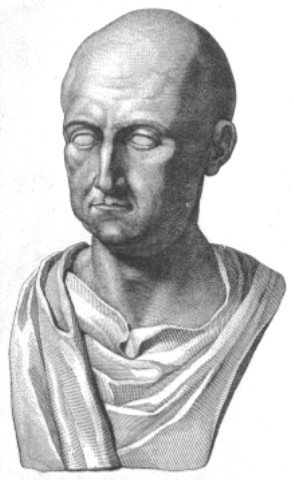
By the time Rome counterattacked, in 204 BC, with a young general called Publius Cornelius Scipio invading Africa, Hannibal's position had eroded too far to recover. He was recalled to defend Carthage. At Zama, in October 202 BC, a forty-five-year-old Hannibal, fighting on home soil he had not seen since boyhood, with elephants who panicked when Roman trumpeters blasted horns at them, lost his last battle to a thirty-four-year-old Scipio. His cavalry advantage was gone, transferred to the Numidian allies who had defected to Rome. He fought well. He did not win.
He lived another nineteen years, in exile, evading Roman extradition, until in 183 BC, with Roman agents closing in on his hiding place in Bithynia, he took poison rather than be captured. He had outlived Fabius by twenty years. He had outlived Scipio by less than one. He died at sixty-four, in a country he did not know, having spent the second half of his life as a refugee from a victory he had been unable to use.
The great insight
The argument Rome had with itself in 217 and 216 BC, between Fabius's caution and the popular demand for action, killed more Romans than any single Carthaginian decision. Hannibal's tactical brilliance was the proximate cause of fifty thousand deaths. The internal Roman argument was the structural cause. Without the political pressure to fight Hannibal in open battle, no fight would have happened. The army at Cannae was on the field because Rome could not agree with itself.
The cost of that argument was paid by people who had not been invited to it.
This is the great insight, and it is uncomfortable, and it goes well beyond Rome. The most expensive arguments in any organisation are the ones the organisation is having with itself, and the costs of those arguments are very rarely paid by the people having them. Politicians argue; soldiers die. Executives argue; engineers debug. The argument feels like the thing that matters because it is what is happening in the room you are in. The thing that matters is what happens later, in the room you are not in.
Populism wins arguments. Strategy wins wars. They are not the same activity, and treating them as the same is how Cannae happens.
Every team has a Fabius
I have been in many small versions of this. The senior engineer who says "let's not deploy on Friday afternoon" is, in our small way, Fabius. The team is impatient. The deadline feels good. The rollback plan, on a Friday afternoon, is a person, awake, alone, on a bank-holiday weekend. The strategic answer is to wait. The popular answer is to ship. The argument is heated. The argument is also unresolved by reason; it is resolved by who has the political capital to win the meeting. Sometimes the strategic answer wins. Sometimes the popular one does. The cost of the popular answer is paid downstream, by someone, often after the people who argued for it have gone on holiday.
Every team has a Fabius. The team usually does not realise it has a Fabius until someone has to explain to a customer why the system was down for thirteen hours. Then, briefly, the Fabius is vindicated. Then the next deadline arrives, and we forget.
The pattern is older than software. It is older than Cannae. It is the pattern in which a society chooses the strategy that feels good over the strategy that works, because the strategy that feels good is a lot easier to vote for, and the cost of getting it wrong arrives somewhere else, slightly later, paid by someone whose name nobody will remember. Fabius's name became a verb. Almost all the men who insulted him died on a field in Apulia in early August.
Reading it now
The reason this story keeps being told, two and a half thousand years later, is not the tactical brilliance of the double envelopment, although that is taught at military academies and will be taught at military academies long after the academies themselves are obsolete. The reason this story keeps being told is the bit before the battle: the argument inside Rome, the man called a coward who turned out to be right, the populist who got fifty thousand people killed and was thanked for it on his return.
Strategy is boring. Patience is unsexy. The Fabian course of action, in any field, will look like indecision to people who confuse motion with progress, and you will be insulted for it. You will be told you are scared. You will be told you do not understand the urgency. You will be told that the moment is now, that the enemy is at the gates, that doing nothing is itself a decision, and so on.
Sometimes those people are right. Sometimes they are Maharbal at the camp the night after Cannae, urging the cavalry on, and they are right. More often they are Varro on a hot August morning telling eighty thousand men to attack a man who has prepared the ground. Doing the right thing instead of the visible thing requires that you accept a meaningful chance you will be remembered, by your contemporaries, as the wrong sort of person to have around in a crisis. Fabius accepted that. He did not, particularly, enjoy it.
He was right. They were wrong. The bodies were the receipt.
That's the great insight.