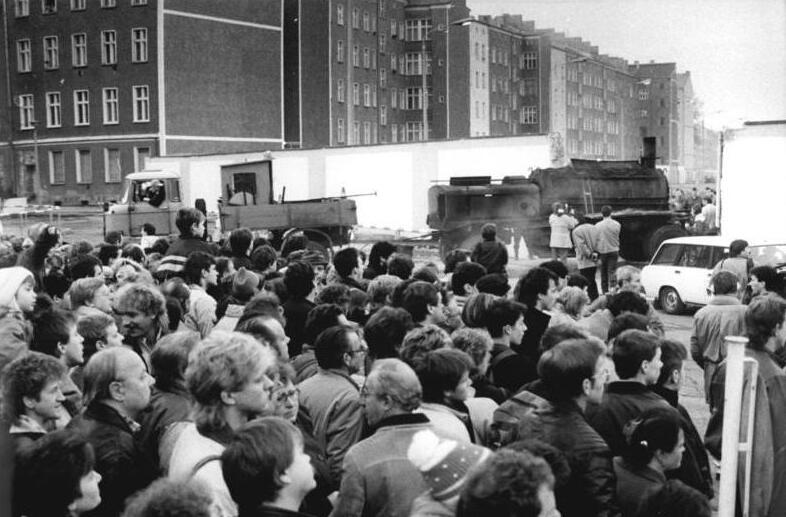
There is a story I have read in three different places about a woman in East Berlin who, in the days after the Wall came down, refused to leave her flat. The Wall was open, the country was reuniting, the world had shifted in a single weekend, and she would not move. The flat had been assigned to her. The state had decided. To her, the new freedom looked less like a gift and more like a pile of decisions she did not want to make. She stayed.
I think about her a lot when I read Bulgakov.
This is the second piece in a series I'm calling "One Great Insight". The first was Guy Debord's Society of the Spectacle, which is a book to think with. The Master and Margarita is a book to laugh with, or to read out loud to someone in a kitchen. They argue about the same thing.
The deal a tyranny makes with you is this: hand over your courage, in small daily increments, and we will hand back certainty. Mikhail Bulgakov's book is the most joyful, ridiculous, talking-cat-having argument you will ever read against taking that deal.
Who was Bulgakov?
He was, first, a doctor. Mikhail Afanasyevich Bulgakov was born in Kyiv in 1891, trained in medicine, served as a field doctor in the First World War, and treated peasants in a remote village in Smolensk Governorate before turning to writing. There is a small body of his short stories, A Country Doctor's Notebook, that you can read in an afternoon and that will tell you most of what you need to know about his eye for human absurdity. Picture a young man with a stethoscope, a morphine addiction, a wry understanding of his own failures, and a remarkable capacity for noticing the moments when reality refused to behave.
By the late 1920s he was a moderately successful playwright in Moscow. Stalin saw his play The Days of the Turbins, about a White Russian family during the Civil War, somewhere between fifteen and twenty times. The General Secretary of the Soviet Union, sat in his theatre box, watching the same play more often than most theatregoers see anything in their lives. Bulgakov should have been untouchable. He wasn't. RAPP, the Russian Association of Proletarian Writers, had decided he was an enemy of the people. Reviews came in viciously and on schedule. Plays were cancelled. By 1930, Bulgakov was effectively unpublishable.
He wrote a letter to Stalin asking either to be allowed to write or to be allowed to leave the country. Stalin phoned him personally, on the afternoon of the 18th of April 1930. The conversation lasted a few minutes. Stalin asked if he really wanted to leave the Soviet Union. Bulgakov, panicked, said something noncommittal. Stalin said something noncommittal back, and hung up. Bulgakov spent the rest of his life regretting the call.
He did get a job at the Moscow Art Theatre, but his real work, by then, was a manuscript he had begun in 1928 and would keep rewriting until his death. He burned an early draft in 1930, in his own stove, in despair. He went back, two years later, and reconstructed it from memory. The book was unfinished when he died of a hereditary kidney disease in March 1940. His third wife, Elena Sergeyevna, kept the manuscript safe through twenty-six more years of Soviet life until it was finally published, heavily abridged, in the journal Moskva in 1966.
He never saw it printed.
Why is the writing so interesting?
Most novels written under a tyranny are, in some way, about the tyranny. They protest, they document, they smuggle. Bulgakov did something stranger. He wrote a book in which the Devil arrives in 1930s Moscow with a black cat, an ex-choirmaster, a fanged hitman called Azazello, and a beautiful naked witch, and proceeds to ruin the cultural establishment for a long weekend before disappearing again.
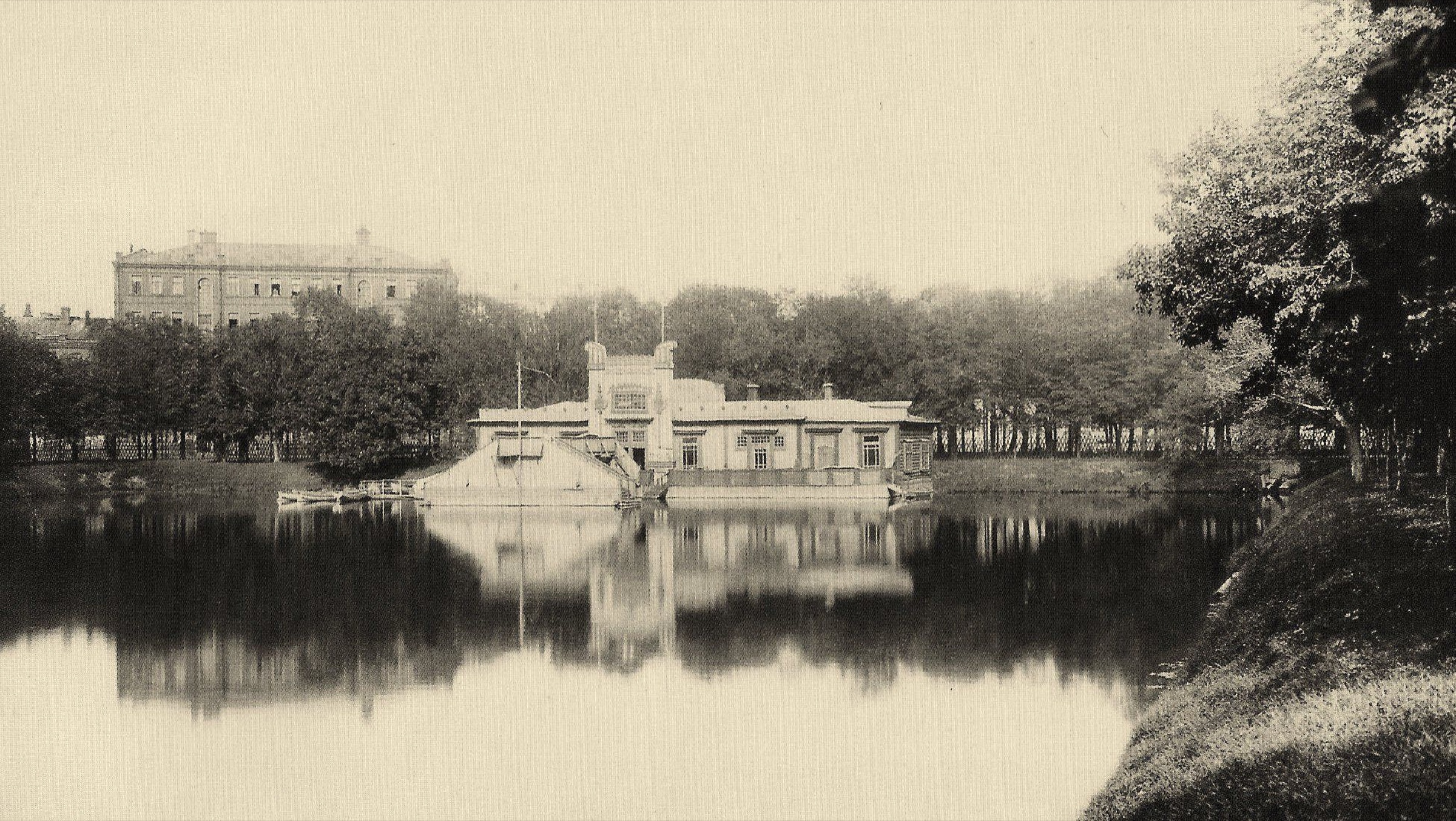
The book opens at the Patriarch's Ponds, an unremarkable little park in the centre of Moscow, on a hot spring evening. The editor of an atheist magazine and a young poet sit on a bench discussing the non-existence of Jesus. A foreigner in an expensive suit interrupts them, claims to have had breakfast with Immanuel Kant, predicts that the editor will shortly have his head cut off by a tram, and then sits back to watch the prediction come true.
The cat is called Behemoth. He walks on his hind legs, drinks vodka, plays chess with his master, and at one point, when challenged for not having a tram ticket, calmly produces ten kopecks from a pocket he does not have. A magic show at the Variety Theatre rains banknotes on the audience and dresses every woman present in the latest Paris fashions, both of which evaporate as soon as they leave the building, stranding hundreds of bureaucrats' wives in their underwear on the streets of Moscow. A man's head, separated from his body in chapter three, is presented as a goblet at a midnight ball.
This is not how protest literature usually behaves.
Running underneath the Moscow chaos is a second novel, written by a character called the Master. It is about Pontius Pilate. Pilate interrogates a wandering philosopher called Yeshua Ha-Notsri. He likes Yeshua. He understands, instantly, that the man is innocent and harmless. He has every power Rome gave him to spare him. He doesn't. He does what is convenient, signs what he is supposed to sign, and spends the next two thousand years being unable to sleep.
The third strand is a love story, between the Master, the author of the Pilate novel, and Margarita, who eventually accepts an invitation to host Satan's annual ball in exchange for the Master's return. They are both, at the end, given peace, but not light.
Three novels, woven into one. A black-comic tour through Stalin's Moscow, a quiet philosophical novel about Roman law, and a love story in which Satan is the romantic broker. None of them quite belong together until you finish the book and realise they are all, very obviously, about the same thing.
What is the book actually about?
Cowardice. The worst of human vices.
The line is in the book, more than once. Pontius Pilate condemns himself to two thousand years of insomnia not because he killed a wandering preacher, but because he knew, when he signed the order, that he was doing it to keep his job. The literary critics in Moscow are not punished for atheism, or for class disloyalty, or for any of the categories the Soviet state actually used. They are punished for being cowards. For writing the reviews they were told to write. For pretending not to see what they saw. For trading the use of their own judgement for the safety of their salaries.
The Devil is, surprisingly, not the antagonist. Woland is dispassionate, slightly amused, and almost always correct in his judgements. He is there to sort out the books, in both senses. He punishes the bookkeeper of the Variety, an unimaginative thief, by making the man's filing cabinets sing dirty songs at the secret police. He gives the poet Ivan Bezdomny, a hack who has spent his career writing on commission, a long stay in a sanatorium where the poet finally gets some peace from himself. He shows up at the literary union meeting after the chairman has been decapitated; he is the answer, not the question.
Bulgakov's Devil isn't tempting people into sin. He's punishing them for selling themselves to the state for the price of a flat and a union card. The book is, in its strange laughing way, a moral argument. The deal is bad. The deal has always been bad. And the people who took the deal will be visited, eventually, by something with a tail.
Why whimsy?
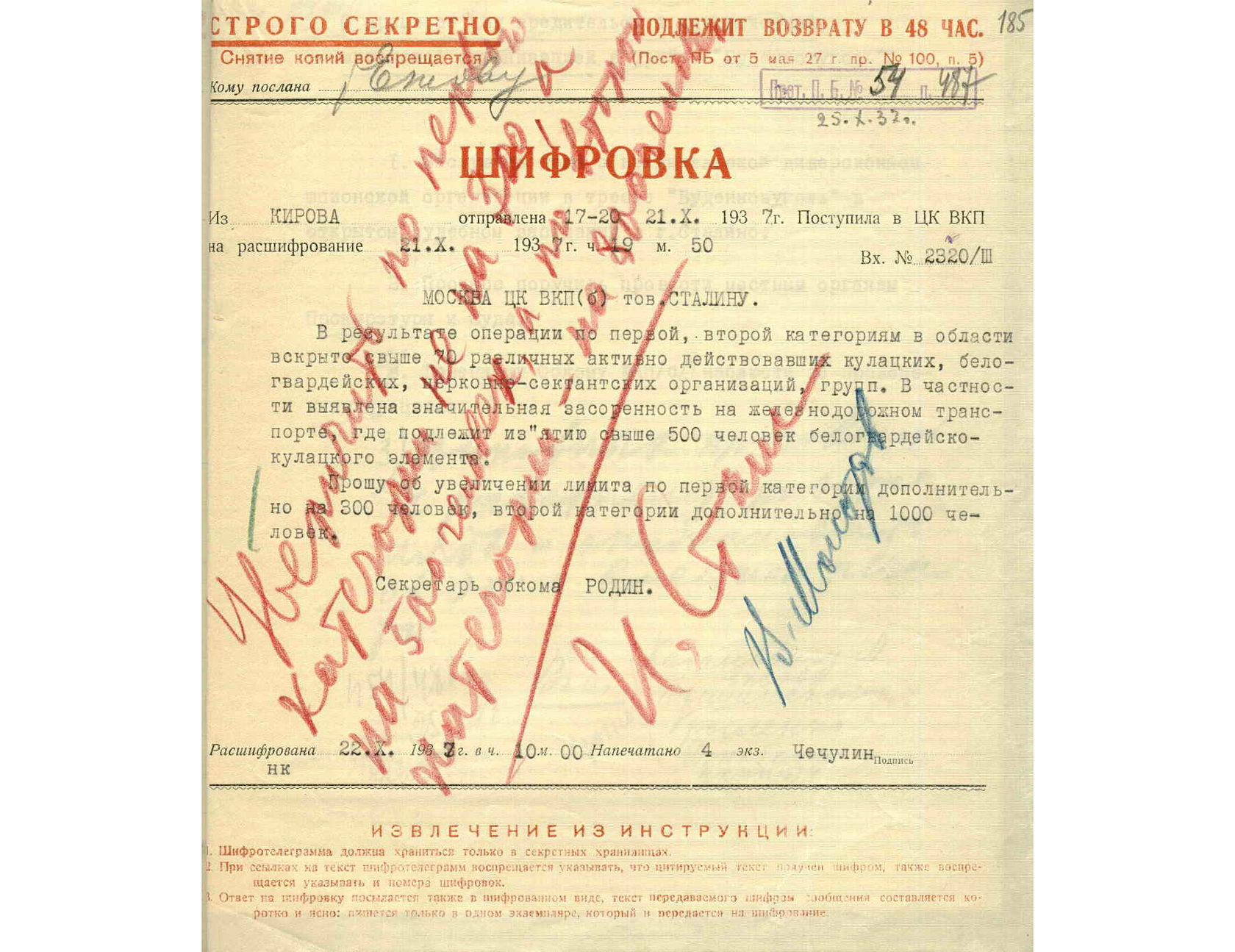
Stalin's propaganda apparatus had words for many things. Counter-revolutionary. Trotskyite. Bourgeois. Cosmopolitan. Decadent. Petty-bourgeois deviationist. There were files for these things. There were officers trained to identify them. The whole censorship machine was a vast, finely tuned classification system, designed to take any piece of writing in the Soviet Union and put it in one of two boxes: permitted or forbidden.
The Master and Margarita, when it eventually surfaced, broke the machine. There was no category for it. It was not anti-Soviet in the way the censors had been trained to identify; it didn't argue with Marx, it didn't long for the Tsar, it didn't plead for free trade. It mocked the apparatchiks, but it did so by sending the Devil to a literary union meeting. How does an ideological filter respond to a chapter in which a talking cat insists, with elaborate dignity, on paying the correct tram fare?
This is what Bulgakov was up to, and I don't think he came at it accidentally. The fog of propaganda has a particular property: it has been generated to neutralise rational dissent. Argue with the state in the state's language and you lose, because the state has more practiced rhetoricians and a printing press, and because, at certain points, there was a knock on the door at four in the morning. The only attack that breaks through the fog is one the fog cannot describe.
Whimsy is what that looks like. Whimsy is the most subversive register available under a regime of forced seriousness.
This is, I think, the great insight of the book, and the reason it kept him writing through ten years of unpublishable obscurity, three hospitalisations, and the slow failure of his kidneys. A manifesto could be filed. A philosophical critique could be filed. What was needed was a black cat playing chess. The system had nothing to say about a black cat playing chess. It could ban the book; it could not answer it.
The flat in East Berlin
The deal, again. Hand over your courage, in small daily increments, and the state will hand back certainty. The flat is assigned. The job is assigned. The thoughts are mostly assigned, or at least the ones it is safe to have out loud. In exchange, you do not have to make any large decisions. The state has made them. You can spend your weekly allotted hours of leisure in the assigned park drinking the assigned beer, and you will be fine.
The trouble with this deal is that it costs more than you can see at the point of sale. It costs the use of your own judgement. It costs the part of you that knows, at the moment you sign the order against the wandering preacher, that it's the wrong call. It costs Pontius Pilate two thousand years.
When the Wall came down, the woman in the flat had already paid. Her courage had been spent in increments, decades ago, on the small daily compromises. She did not have any left to put towards the choosing of a new life. The deal had taken what it was supposed to take.
I don't think she was a coward. I think she was a person who had lived inside a system that took its share of her courage in trade for a roof and a routine, and when the system fell over she did not have the surplus to spend. Bulgakov is not interested in mocking her. He is interested in the trade itself, in the people who designed it, and in the much larger group of people who, like Pontius Pilate, had every option to refuse it and didn't.
Manuscripts don't burn
This is the famous line. Woland says it to the Master, who has come to believe his novel about Pilate is gone, lost in the fire he set in a moment of despair. The Devil produces the manuscript intact and hands it to him.
I find it impossible to read this scene without thinking of Bulgakov, in 1930, burning his own draft. He was in the worst year of his life. His plays had been cancelled. The reviews were sustained, organised attacks designed to break him. He was unpublishable, broke, and on the wrong side of every committee that mattered. He took the manuscript he had of the book and burned it in his stove.
Then he started again. He wrote it again from memory. He kept writing it, while moving back and forth between three jobs and several drafts, until he could not see the page properly any more. Elena finished editing it after he died.
Manuscripts don't burn, in the end, because some sentences, once you have thought of them, will not let you go. They have to come out. The work continues to exist whether the world is willing to print it or not. The Soviet state had a very effective set of tools for stopping books from being published, and an eventually less-effective set of tools for stopping books from being written. Bulgakov bet his life on the gap between the two.
He won the bet. He just didn't live to see it.
Reading it now
I don't think the book is mainly about Stalin's Moscow, in the way I don't think the Society of the Spectacle is mainly about 1960s France.
The deal is offered to all of us, all of the time, in milder forms. Hand over your courage in small daily increments, and we will hand back certainty. We will tell you how to think about the news. We will tell you which opinions are safe to hold at work. We will tell you, in the algorithm's gentle voice, what you wanted to want this morning. None of this is Stalin's Moscow, and it would be obscene to suggest it is. It is, however, exactly the same trade, scaled down to a level where most of us will never feel the pinch.
Bulgakov's response to the deal was to write a book in which the Devil arrives, ruins the cultural establishment, and leaves with a smile. There is, I think, an instruction in there. When a system asks for your courage, give as little of it as you can. When it asks you to take it seriously, refuse. Write the talking cat. Throw the magic show. Make it absurd, make it specific, make it impossible to file.
Manuscripts don't burn. Neither does the bit of you that knows the call was wrong.
That's the great insight.