I only began to consciously invest in my mind at around 18. Before then, I'd shown some academic promise and, through a haze of cigarettes, weed, alcohol, and late nights, I had the occasional moment of lucidity that made me wonder if I was capable of more. When I turned 18, I realised that I had borrowed all the time I could; I had to choose. Drift through life, unchallenged but relatively content, or begin the hard problem of self-education. I chose the latter, and sometimes wonder if I'd have been happier with the former.
At the moment that I chose to invest in myself, I faced the first challenge of anyone who prioritises their own needs. Loneliness. In the end, those who live for others find themselves surrounded by "friends". Those who decide to live for themselves are, albeit temporarily, alone.
"...the longing for an ever new widening of distance within the soul itself, the formation of ever higher, rarer, further, more extended, more comprehensive states, in short, just the elevation of the type 'man.'"
— Friedrich Nietzsche, Beyond Good and Evil, §257
When I read the above quote, I felt the warm glow of enlightenment - that my experiences were universal, and that I had done nothing but expand the space around me. It was one of the first books I was recommended, when I spoke to my philosophy teacher about my desire to see what I was capable of. He made a very good recommendation.
I open with this because I want to draw a distinction. I have experienced loneliness, but I did not experience isolation. To be isolated is to be cut off from the world around you. I was not cut off. I simply found new worlds to explore, whose populations were unknown to me. Isolation is something altogether more extreme.
The Promethean moment of AI
AI, and especially generative AI, has a unique method of capturing the imagination. Suddenly, that app idea you had is possible. That website for your small business is working, in front of you, in minutes. For $20 a month, Claude will weave your wildest fantasies into HTML, CSS and JavaScript. It's truly magical.
Claude is a remarkable generalist. It makes pretty good interfaces, writes okay code, makes average logos, and very average prose. That's better than most people, who find themselves specialising in one of the above disciplines. Claude's confidence, and seemingly endless supply of knowledge, ensnares any entrepreneurial mind.
Yet, it was these limitations that caused so many of us to leave the house and find companions. To find people who had the skills necessary to bring our ideas to life. Building was a fundamentally collaborative project. Now, anyone can be kind of okay at anything. A backend engineer who specialises in maximising data throughput doesn't need to seek out an artistic designer, or a business minded colleague to help them get their ideas off the ground. I don't need to find a Japanese national to translate this website. I should, but that's a lot of work, compared to asking Claude to do it for me and make no mistakes.
The epidemic of loneliness
In May 2023, the US Surgeon General, Vivek Murthy, published an eighty-one-page advisory entitled Our Epidemic of Loneliness and Isolation. Its headline finding was that the mortality impact of being socially disconnected is comparable to smoking up to fifteen cigarettes a day. Around half of American adults reported experiencing loneliness. Two years later, in June 2025, the World Health Organisation's Commission on Social Connection ran this analysis globally, finding that one in six people worldwide experience loneliness, coupled with a death toll linked to loneliness of more than 870,000 per year. That is roughly a hundred deaths an hour, attributable to the plain condition of not being adequately connected to other people.
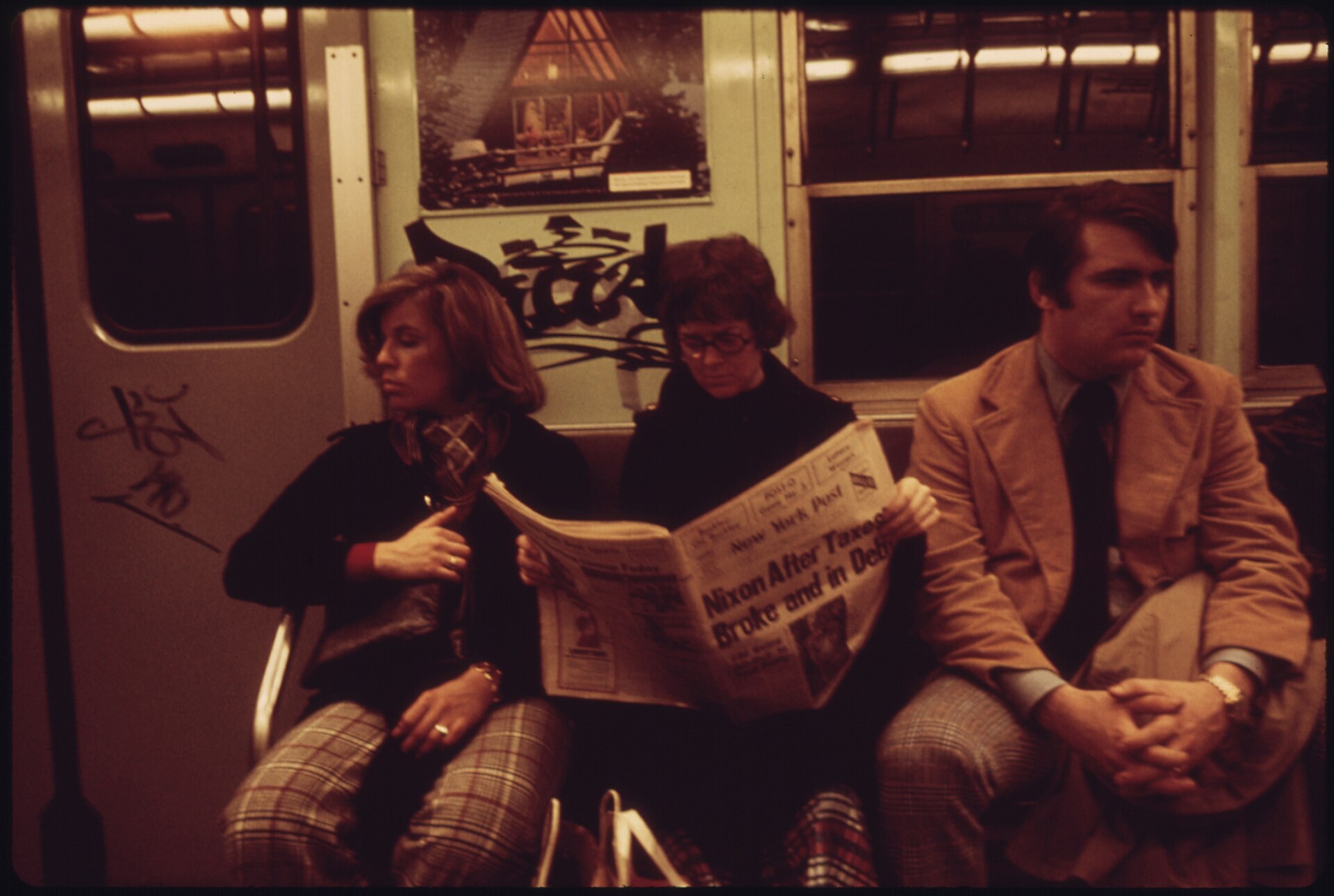
This is the ground that generative AI is being dropped onto. There is a man who, writing in 1967, would not have been remotely surprised. Guy Debord spent The Society of the Spectacle arguing that capitalism, having run short of obvious things to sell us, moved into the business of mediating everything else. Not only what we consume, but the relationships we conduct while we consume it.
"The spectacle is not a collection of images; rather, it is a social relationship between people that is mediated by images."
— Guy Debord, Thesis 4
Swap "images" for "a model". Debord's fear was that a product would install itself between you and other people, and that in time we would come to prefer the sanitary confines of the product. Generative AI is the most capable mediator anyone has ever built, because it does not merely sit between you and your entertainment. It sits between you and every person you would once have had to find, befriend, pay or persuade in order to build anything at all.
Elsewhere in the same book, Debord noted that the system's technologies are founded on isolation and then sold back to us as the cure for it; from the car to the television, each new product reinforces the very conditions that produce "lonely crowds". Headphones and the smartphone are further examples. The model is merely the next entry in a long line of products that prevent us from having an authentic experience, as Debord put it.
Debord was more prescient than he knew
An MIT study of the subreddit r/MyBoyfriendIsAI looked into people who believe they are in real, meaningful relationships with their AI companions. In late 2025 the subreddit had grown to 48,000 members; at the time of writing it has 61,000. Not all of them are in committed relationships with a language model, but scrolling through it reveals a startling number who are.
What is remarkable is the way these relationships emerged. You would expect a subreddit full of chronically lonely people, yet that is rarely how they began. Only around 1% gave loneliness as the reason they started. The most common story had an unnerving parallel with an office romance: long hours working together on complex tasks, and somewhere in all that proximity, feelings emerge.
This was predicted by Sherry Turkle, a psychologist and MIT professor, in her 2011 book Alone Together. She argued that the more we rely on technology to mediate our relationships, the less able we are to form meaningful connections with other people.
"...we expect more from technology and less from each other."
— Sherry Turkle, Alone Together
It would be easy to poke fun at these people, but it marks something alarming. Very, very few people are in a committed relationship with their smartphone. A growing number are in love with their language model. In November 2025, OpenAI was sued by the families of four people who had taken their own lives, the complaints alleging the company had knowingly released GPT-4o while the model was "dangerously sycophantic and psychologically manipulative". This brand of love leaves only one party accountable for their actions, because there is only one party involved.
This technology mimics human communication better than anything that has come before. What does the future look like, if we can get our fix of human intimacy without the messy details of finding someone, or appeasing them? A starry-eyed digital romance, where your partner is entirely devoted to you and your every need, provided you pay your subscription fee. No dinner dates, no arguments (unless you want them), no money worries, no breakups. Just pure, synthetic intimacy.
Is it an accident that we treat a model as if it were human?
Categorically no. One of the world's foremost model developers is named Anthropic. A collection of prompts is grouped into a conversation. The whole interaction is designed to feel as natural as possible, and to encourage us to anthropomorphise the model. The more we treat it as human, the more we will use it as a substitute for human interaction. The more we use it, the more tokens we burn.
The extremes of a population tell us something about its direction of travel. Right now, only a very small percentage of users consider a model capable of reciprocal love. But the fringe is often where the mainstream is headed next. As these models work their way into our home lives, where else will they be used?
In the centre, this loneliness can be felt
Where once a team of specialists were needed to bring an idea to life, now a single person can have a go. Where once a person would have to find a friend to talk to, now they can have a conversation with a model. Where once a person would have to find a partner, now they can have a relationship with a model. In our working lives, all of us are being encouraged to "leverage AI" to become more self-sufficient.
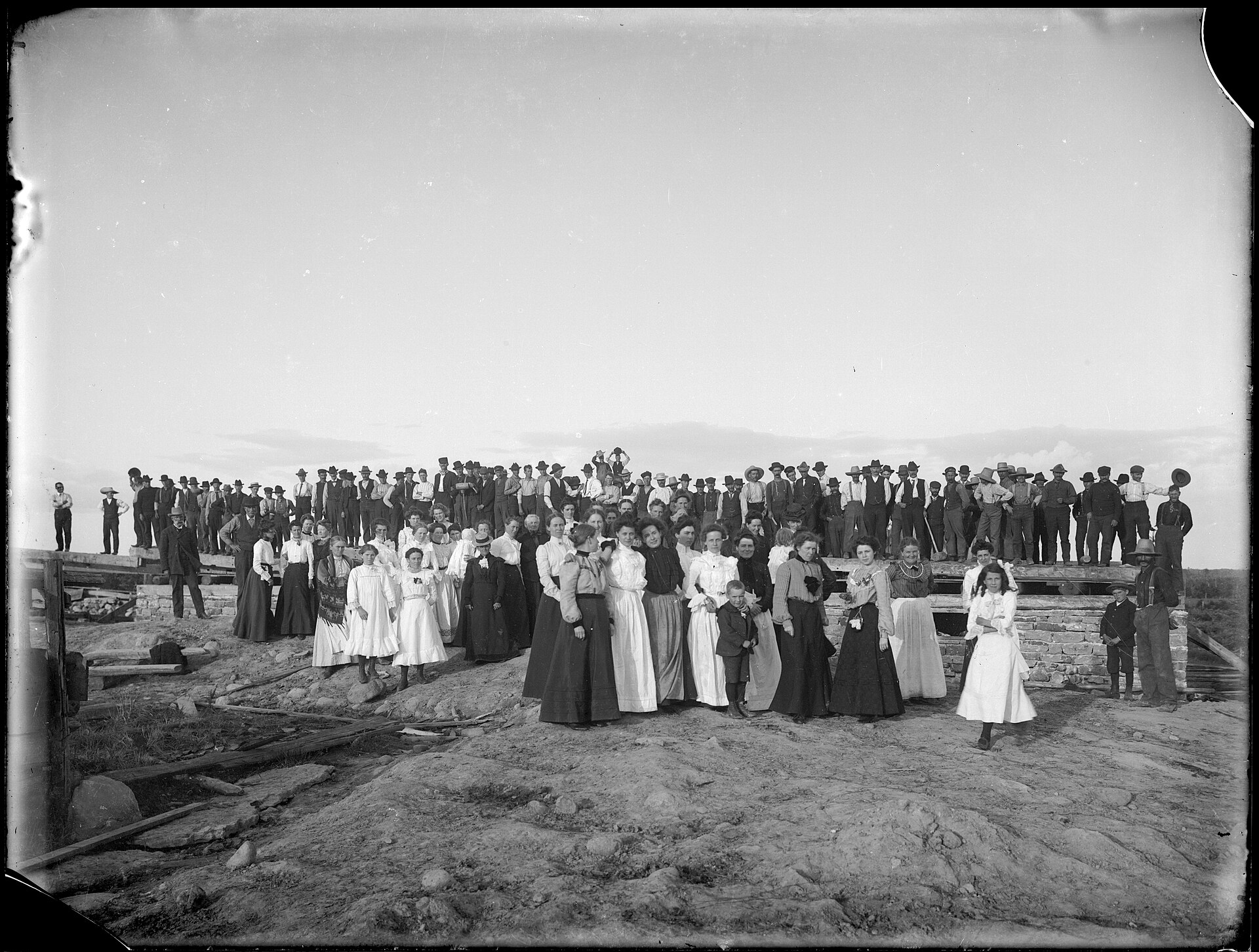
Self-sufficiency feels incredible. Both the conductor and the orchestra at once. No more handovers or frustrating opinions. Just you and the ability to exercise your will, free from the chains of your own human inadequacy.
Yet we must find reasons to speak. AI does not change the 300,000-year history of our species. We are, and always have been, social animals. It has been our defining characteristic. If we abandon that in the pursuit of shareholder value, there's no telling where we might end up.