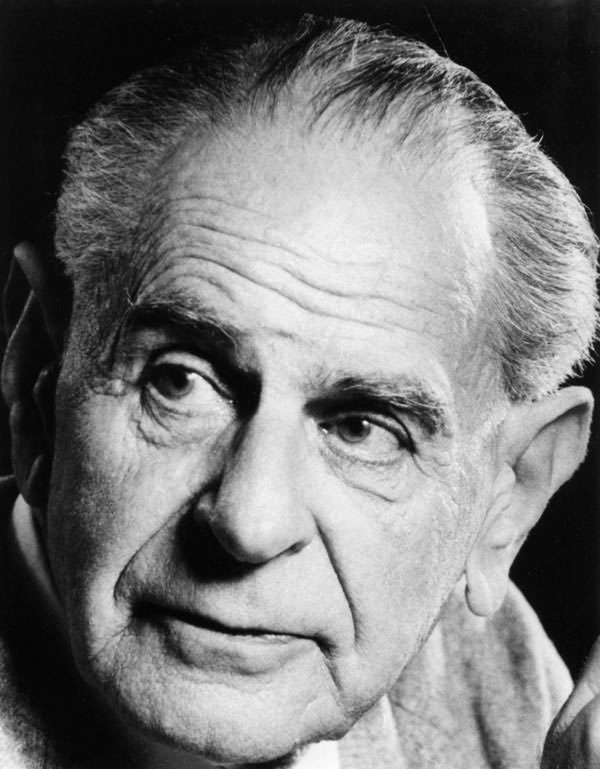
On 25 October 1946, Ludwig Wittgenstein picked up a fireplace poker and waved it at Karl Popper. They were in a small room at King's College, Cambridge. Bertrand Russell was sat in the corner, polite and slightly bemused. Wittgenstein had been chairing a meeting of the moral sciences club; Popper, the guest, was a Viennese émigré who had spent the war in New Zealand writing The Open Society and Its Enemies, and who had been a public critic of Wittgenstein's philosophy for years. He had been talking for less than ten minutes when the poker came out. Popper later claimed to have responded to it by offering Wittgenstein a useful moral rule: not to threaten visiting speakers with fireplace pokers. Wittgenstein threw the poker into the grate and stormed out of the building. The two men never met again.
What they had been arguing about, technically, was whether there were any genuine philosophical problems, or only puzzles produced by the way we use words. Popper said yes. Wittgenstein said no. Nobody could quite agree afterwards on what had been said and in what order, which is fitting, because the two of them did not agree on what an argument was.
This is the third piece in a series I'm calling "One Great Insight". The first was Guy Debord. The second was Mikhail Bulgakov. This one is Ludwig Wittgenstein, and it is about the most uncomfortable possibility there is in any conversation: that you and the person you appear to be locked in furious disagreement with are not, in any meaningful sense, talking about the same thing.
When two reasonable people argue and cannot resolve it, the standard explanation is that one of them is wrong. Wittgenstein's late work proposes a different one. They are not playing the same game.
Who was Ludwig Wittgenstein?
He was, on every relevant axis, an unlikely man.
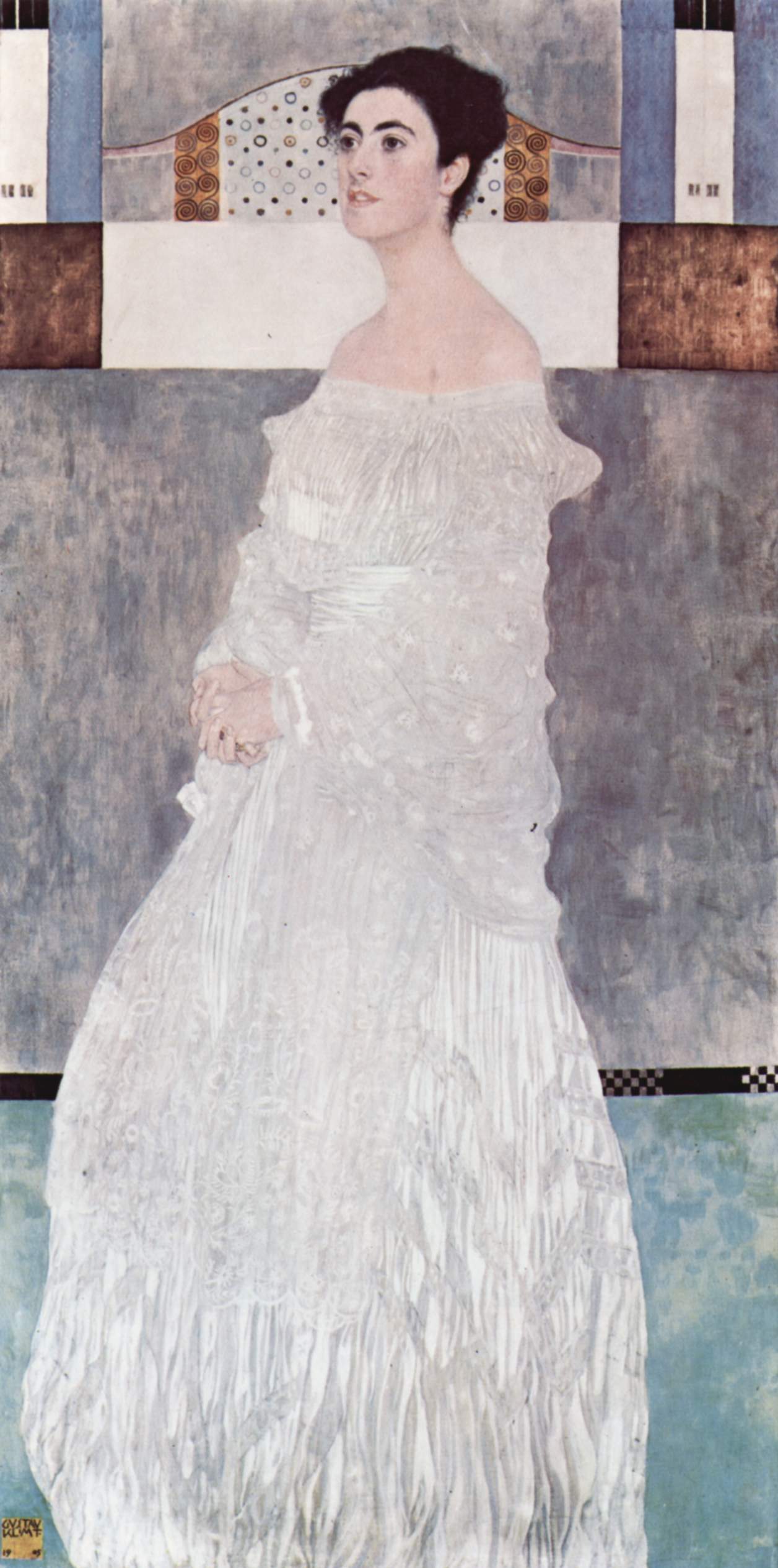
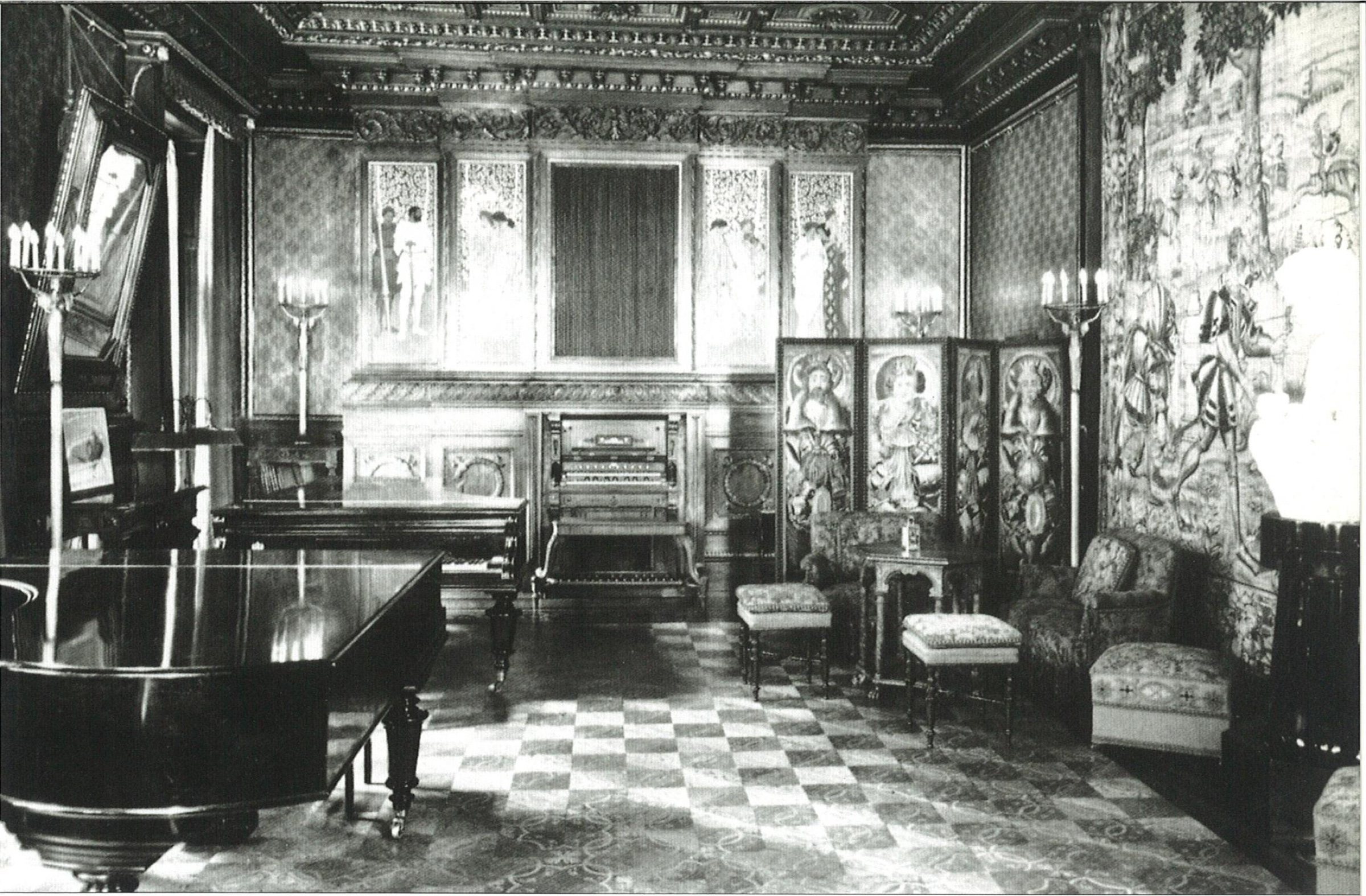
He was the youngest of nine children in a family that, by some measures, was the second-wealthiest in the Habsburg Empire after the Rothschilds. The Wittgensteins of Vienna lived in a building large enough to host a private chamber orchestra and most of the city's musical aristocracy. Brahms gave the children piano lessons. Mahler was a frequent guest. Gustav Klimt painted Ludwig's older sister Margarete in 1905, on the occasion of her wedding, in a long silvery dress; the painting now hangs in the Neue Pinakothek in Munich.
The fortune had been built by Ludwig's father, Karl Wittgenstein, who industrialised steel in central Europe and was sometimes called, slightly grandly, the Carnegie of Austria. The wealth was new in the way Carnegie's was new. The family was not. They were, in the convoluted vocabulary of nineteenth-century Vienna, "assimilated Jews": Ludwig's great-grandfather Moses Meyer had taken the surname Wittgenstein in 1808 under Napoleon's Jewish emancipation decree, naming the family for the principality of Sayn-Wittgenstein in what is today Hesse, where the Meyers had served for generations as estate managers. The Christianity that followed in subsequent generations did not, in the end, count.
Of the nine Wittgenstein children, three of Ludwig's older brothers killed themselves. Paul, the surviving middle son, became a concert pianist; he lost his right arm as a Russian prisoner of war in 1914 and went on to commission a sequence of left-hand piano concertos from Ravel, Prokofiev, Britten and Hindemith. Helene, Hermine and Margarete stayed in Vienna. Ludwig, the youngest, inherited a vast share of the family fortune at his father's death in 1913, gave it away within a few years, and went to Cambridge to argue with Bertrand Russell about logic.
Cambridge
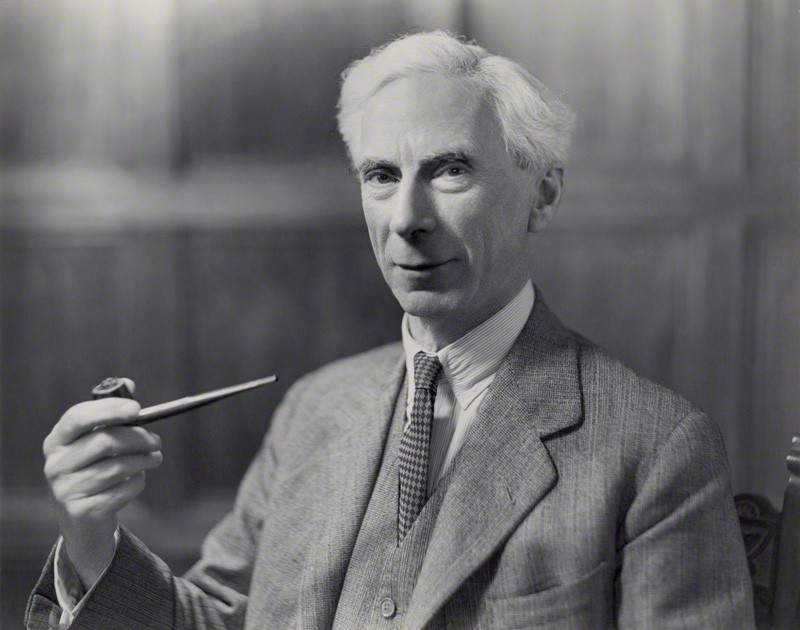
He arrived at Cambridge in 1911 to read engineering, switched to philosophy after a few months, and within two years had written enough that Russell believed he had found his successor. He went off to fight for Austria-Hungary in 1914, was decorated several times for bravery, was taken prisoner in northern Italy, and finished writing his first book in a prison camp.
He spent the next ten years not doing philosophy. He gave away his money. He worked as a primary school teacher in remote Austrian villages, where he was, by all accounts, both a remarkable instructor and a difficult one (he hit children, including a thirteen-year-old who briefly lost consciousness). He helped his sister Margarete design and build a house. He returned to Cambridge in 1929, almost reluctantly, and the rest of his career was lectures, conversations and notebooks.
The lectures were famous. He paced. He gripped his head. He sat for stretches of thirty seconds, a minute, occasionally several minutes, in apparent agony, before saying anything. He said "Hm hm hm" while thinking. He told his students that they were wasting their lives on philosophy and should go and become farm labourers, or doctors, or anything that did real work in the real world. Many of them adopted his Viennese-accented English, his gestures, his pauses. Several became professional philosophers anyway, against his explicit instruction. Two of them, G. E. M. Anscombe and Norman Malcolm, became among the most influential philosophers of the next generation.
He had no time for High Table, no time for the formal furniture of a Cambridge career, and no time at all for being treated as a great man. He hated his own influence. He told his closest students not to imitate him. They imitated him anyway.
The two Wittgensteins
He published one book in his lifetime. The Tractatus Logico-Philosophicus came out in 1921 in German, then in 1922 in English, with an introduction by Russell that Wittgenstein hated.
The Tractatus is famous for its symmetry and for its closing line. The world, Wittgenstein wrote, is the totality of facts. Language pictures the world. Each meaningful sentence corresponds to a possible state of affairs, and to be meaningful is to admit of a picture. Most of philosophy, on this view, was nonsense: not false, but composed of sentences that could not picture anything because they were not about facts. The book ends with the sentence: "Whereof one cannot speak, thereof one must be silent." He believed at the time that he had solved philosophy.
He spent the next fifteen years deciding he was wrong.
The Philosophical Investigations, published two years after his death in 1953, is a different book by a man with the same name. It begins by quoting the Tractatus's picture theory and proceeds, in fragments, to demolish it. Language does not work the way the early book had said it did. Words do not picture things. There is no single "logical form" sitting beneath ordinary speech. Meaning, Wittgenstein now wrote, is use: the meaning of a word is what people do with it.
He gave the new picture a name. He called the units of language activity "language games": the game of giving orders, the game of describing, the game of telling jokes, the game of cursing, the game of praying, the game of asking riddles, the game of greeting. There are countless games. They overlap and bleed into each other. They are not held together by a single shared essence; they are held together by what he called "family resemblances", in the way the various members of a family share features without any single feature being common to all of them.
To know what a word means, you have to know what game it is playing.
Meaning is use
This is the great insight, and it is the one I want to spend the rest of the post on. It rearranges what an argument is.
Two people sit on opposite sides of a table. One of them says, with feeling, that we should have more socialism. The other says, with equal feeling, that socialism is the worst thing that can happen to a country. They will go on for an hour. They will both leave dissatisfied. Each of them will believe the other is either dishonest or a fool.
Most of the time, in conversations like these, the two participants are not playing the same game.
The first speaker, by socialism, may mean a Scandinavian arrangement: a substantial public sector, generous parental leave, single-payer healthcare, robust labour protections, on top of an otherwise functioning market economy. The second speaker, by socialism, may mean Stalin's Five-Year Plans: collectivised agriculture, the abolition of private property, the gulag. They are using the same word. They are picking out, with that word, two different worlds. The disagreement is not a substantive philosophical disagreement. It is two arguments standing next to each other in a coat.
This is what Wittgenstein meant by language games. The word "socialism" is a tool. What it does depends entirely on the game it is being played in. There is no abstract platonic socialism that you can interrogate by sufficient vigour to settle the dispute, because no such thing exists outside the use it is being put to. There is socialism-Sweden, and there is socialism-Stalin, and they are, for the purposes of an argument, not the same word.
Wittgenstein's recommended first move in any argument that has gone on too long is mortifying. It is: stop, and ask the other person to explain what they mean. Not what you think they mean. Not what the dictionary says. What they, in this room, are calling the thing.
If the answer is the same as your answer, you have a real disagreement, and one of you is probably wrong. If the answer is different, you do not have a disagreement. You have two arguments that have been politely sharing an evening.
Why this matters now
Most of the recent advances in artificial intelligence are, technically, advances in a Wittgensteinian theory of meaning.
The transformer architecture, which sits beneath every large language model now in production, is a machine for computing the meaning of a word from its context. Every token in the input sequence is represented as a vector. At each layer of the network, every token's vector is updated by a mechanism called self-attention, which weighs the contribution of every other token in the sequence to that one's current representation. The word "bank" has no meaning in the model on its own. The word "bank", with "river" two tokens earlier, has a meaning. The word "bank", with "deposit" two tokens earlier, has a different meaning. Every token's representation is, at every layer, a function of the company it keeps.
This is "meaning is use" implemented in matrix multiplication.
The technical name for the principle, in computational linguistics, is the distributional hypothesis. The phrase usually attributed to it is John Firth's, from 1957: "you shall know a word by the company it keeps." Wittgenstein had made the same point, in different language, twenty years earlier. The transformer is a Wittgensteinian artefact. It does not look up meanings in a dictionary; it constructs them from use, on the fly, every time.
This has consequences. An LLM, asked the same question with two different system prompts, plays two different language games and gives two different answers. The same model, fed the same words inside two different conversational contexts, behaves like two different products. The model is not really the unit of meaning. The model in context is. Anyone who has spent ten minutes watching a frontier model behave very differently in a coding environment versus a customer-support environment versus a creative-writing environment has seen the language-game theory in action.
Wittgenstein died in 1951. He did not, of course, anticipate any of this. The fact that the most economically important computational architecture of the twenty-first century happens to be the technical realisation of his late metaphysics is not really to his credit. It is, however, a reason to take him seriously.
The negotiation
I left out, earlier, what happened to the Wittgensteins.
After the Anschluss in 1938, the Nuremberg laws applied in Vienna. Three generations of Christianity did not count. The Wittgensteins were, retrospectively, full Jews, and the Nazi state took the position that their property and their lives were, by extension, available for the taking.
What followed is one of the strangest negotiations in the history of either philosophy or finance. Margarete, the sister Klimt had painted, had married an American chemist called Jerome Stonborough and was a US citizen. From outside Vienna, she opened talks with the Reich. Her sisters Hermine and Helene, who had grown up Catholic and considered themselves Catholic, were inside Vienna and inside the laws. The bargaining chip was the family fortune, much of it held in a Swiss trust which Paul, in exile in the United States, controlled.
The price, when it was finally agreed, was 1,700 kilograms of gold transferred from the Swiss trust to the Reichsbank, plus foreign currency and stocks worth, by some estimates, hundreds of millions of dollars in 1939 money. The pretext, for the German bureaucracy that had to write this down on a form, was that the Wittgensteins' grandfather had been the illegitimate son of a German prince. In August 1939, Adolf Hitler personally signed the order granting the family Mischling status; Hermine and Helene survived the war in Vienna. Paul refused to authorise the deal and spent the rest of his life estranged from his sisters.
The wealth that the family had earned by assimilating itself out of Jewishness was traded back, in 1939, for the right not to be killed for being Jewish. The arithmetic of that exchange is not, as far as I can tell, anywhere in Wittgenstein's writing, and it lives in mine.
Reading it now
The great insight is mortifying because it suggests that most of the arguments we have in our lives are not arguments at all. They are confusions, with two people standing very close to one another and pointing at completely different things.
I find this useful at work. I have spent more than my share of meetings watching two competent engineers shout at each other about, say, "real-time" or "type safety" or "service ownership", and slowly realising that the two of them have meant something different by the disputed word the entire time, and that the heat in the room is the heat of two language games rubbing against each other rather than the heat of a real disagreement. Once you can see this, you can intervene. The intervention is dull and unsatisfying: you ask both of them, gently, what they mean by the disputed word, and you write the two answers on a whiteboard. The fight is usually over within a minute.
I find it more useful in politics, where it is harder. Most of the loudest debates in the public square are language-game collisions. People who appear to be arguing about freedom, or fairness, or merit, often turn out to be using the same words for very different objects. The arguments are not resolvable in the form they take. The first move, before the argument can begin, is to find out what game your interlocutor is in and what game you are in, and whether you both want to play the same one.
You may decide you don't. That is also a useful thing to find out.
That's the great insight.