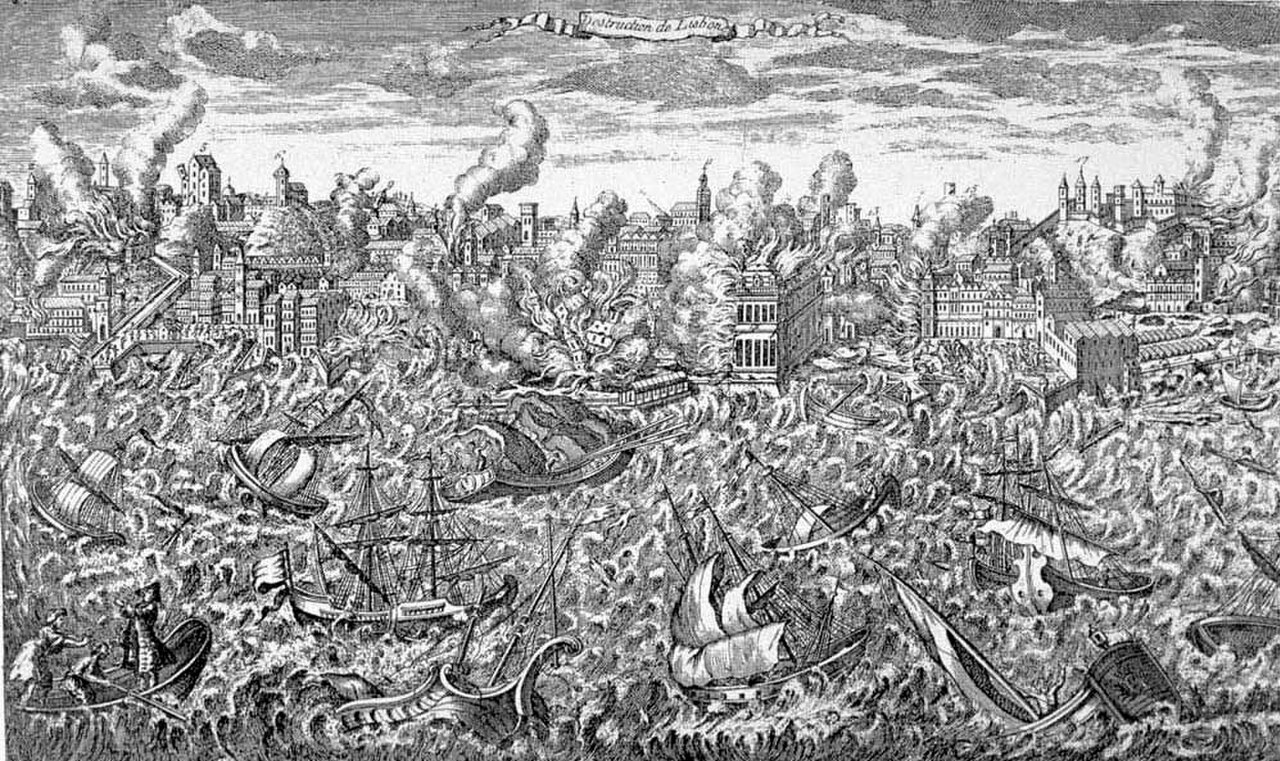
On the morning of the first of November 1755, the city of Lisbon was at prayer. It was All Saints' Day; the cathedrals were full. The first shock came in three waves, each stronger than the last, and within minutes the cathedrals had come down on the people inside them. The fires followed. The tsunami followed the fires. Between thirty and fifty thousand people died on the holiest day of the Catholic year, on the floor of the building that was supposed to mediate between them and the God who let it fall.
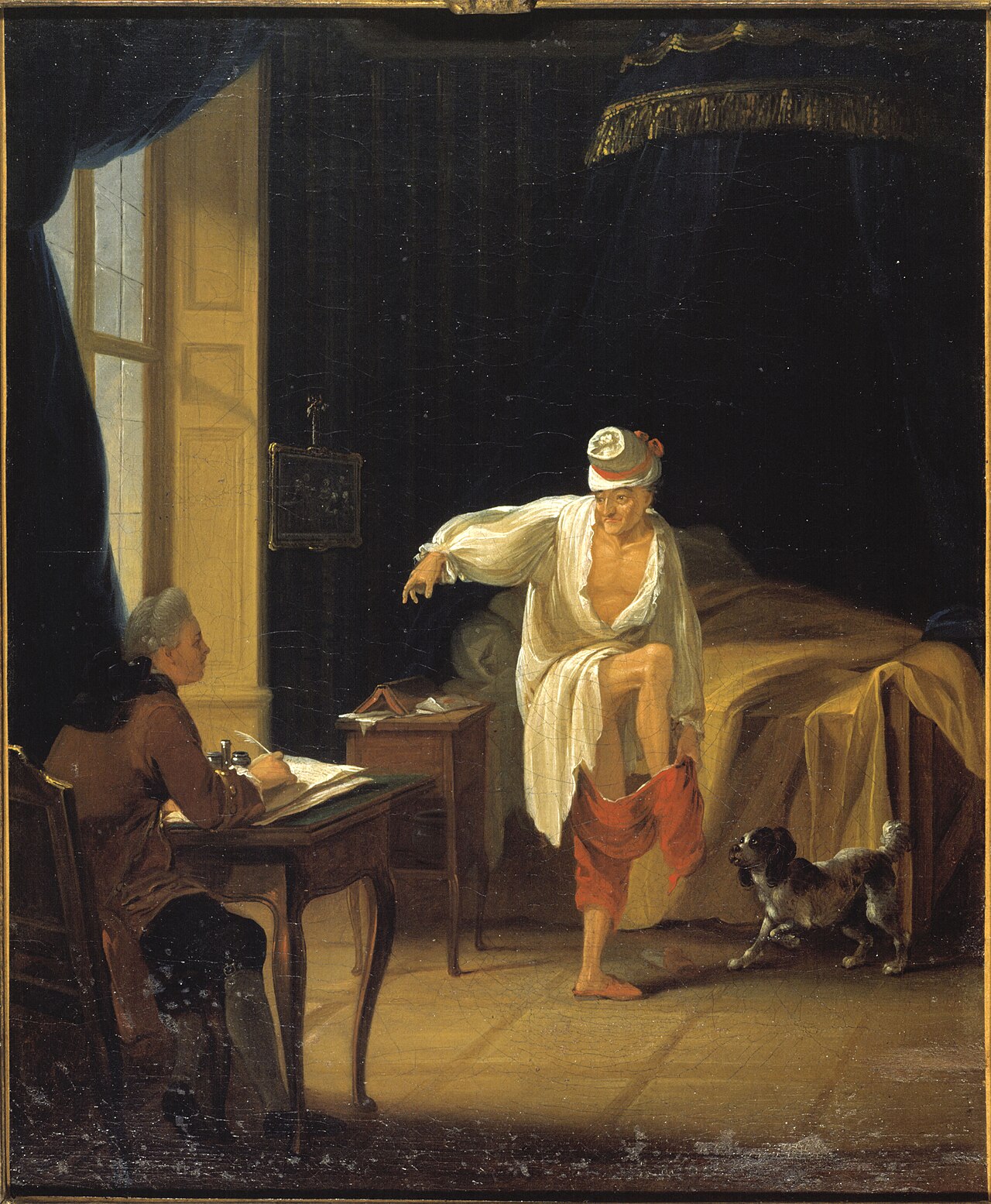
Voltaire read the news in Geneva. He was sixty. He sat down and wrote a poem against the philosophical position that this was, somehow, the best of all possible worlds. Three years later he wrote a short, savage novel making the same argument by other means, and it became one of the most-read books in any European language. It ends, after several hundred pages of disaster, on six words.
Who was Voltaire?
He was born François-Marie Arouet in Paris in 1694, the youngest son of a minor notary. He was educated by the Jesuits at the Collège Louis-le-Grand, where he learned Latin, theatre, and a polished dislike of the church. By twenty-four he had been thrown into the Bastille for a satirical poem about the Regent. He used the eleven months inside to write his first successful play and to take a new name, Voltaire, an anagram of the Latinised form of his surname. The name stuck.
In 1726 he was beaten in the street by the servants of a duke he had insulted at supper, was offered the choice between further prison and exile, and chose exile. He spent the next three years in England. There he read Locke, attended Newton's funeral, watched Shakespeare badly translated, learned English well enough to write in it, and absorbed a model of religious tolerance and parliamentary restraint that he would spend the rest of his life trying to import. He returned to France a changed writer.
From 1734 he lived for fifteen years at the Château de Cirey in Champagne with Émilie du Châtelet, a mathematician and physicist who translated Newton's Principia into French and added her own commentary. The translation, with her commentary, is still the standard French edition. They had been lovers; they became collaborators; they wrote, argued, conducted physics experiments in a barn behind the house, and ran what was effectively a private academy. Du Châtelet died in childbirth in 1749. Voltaire was, by his own account, never quite the same.
He spent three years at the court of Frederick the Great in Potsdam, fell out badly, fled back to France, and eventually settled at Ferney, a small estate on the Swiss border that allowed him to be near Geneva without quite being inside it. He spent his last twenty years there. He grew the village from a hamlet of fifty into a working town of more than a thousand, took in refugees from religious persecution, planted gardens, kept a printing press, and campaigned, publicly and at length, against the judicial murder of a Protestant merchant called Jean Calas. He won posthumous rehabilitation for Calas in 1765, and went on to defend Pierre-Paul Sirven and the Chevalier de La Barre on similar grounds. He did not stop.
He died in Paris in 1778 on a final return visit, aged eighty-three. The story that on his deathbed he was asked by a priest to renounce Satan and replied that this was no time to make new enemies is probably apocryphal. It is the sort of thing he might have said.
What was optimism?
It is worth being clear, before reading Candide, about what Voltaire is attacking. The doctrine of optimism, in 1759, was not the personality trait. Optimism was not "looking on the bright side." It was a serious philosophical position with a serious theological problem to solve.
The problem was this. If God is good, and God is all-powerful, why does suffering exist? A perfectly good God should not want suffering. A perfectly powerful God should be able to prevent it. The existence of an earthquake, a war, or a dying child looks like a refutation of one of the two adjectives. Christian theology has been trying to solve this puzzle since at least Augustine. It has never solved it well.
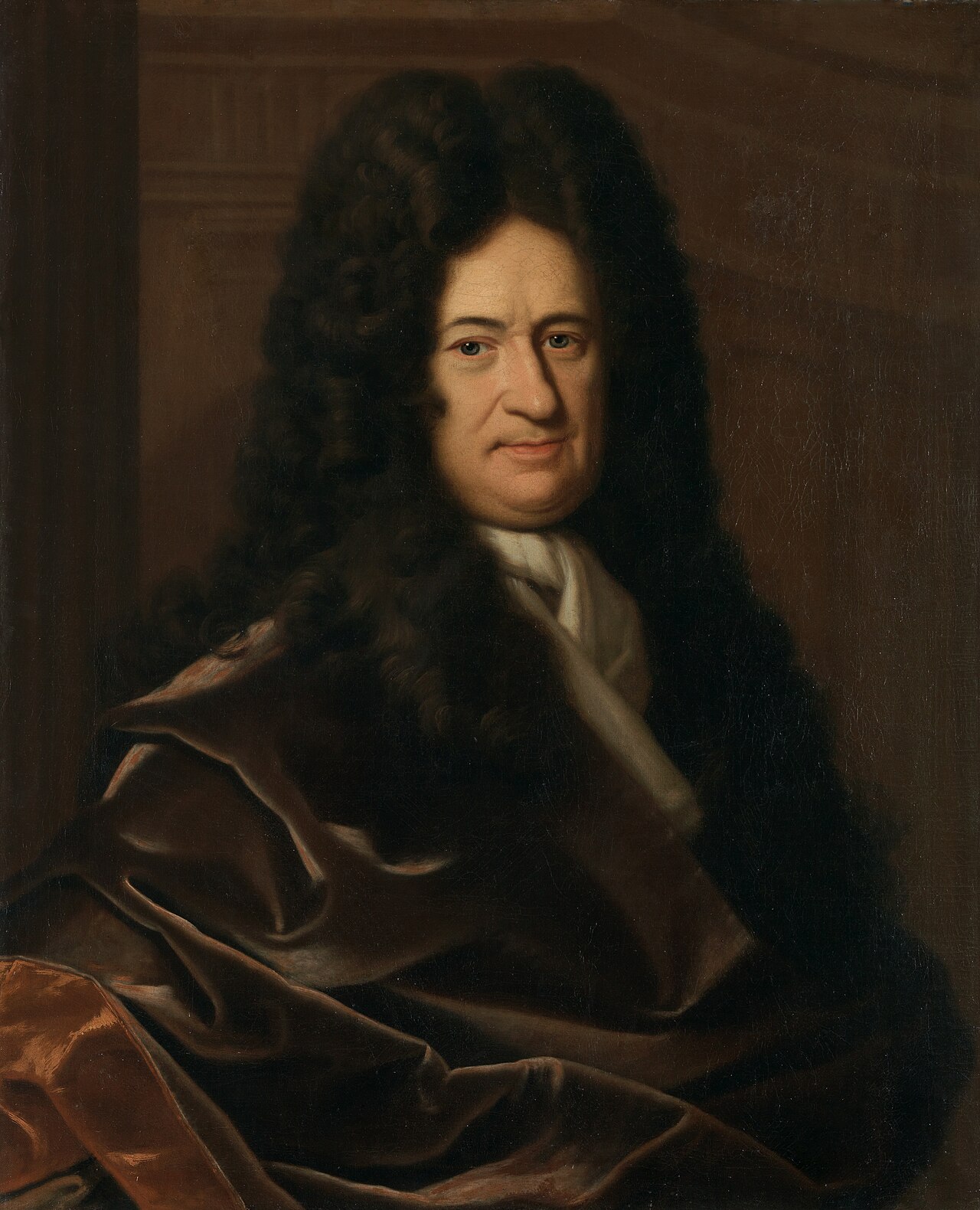
Leibniz's answer, in his Théodicée of 1710, is one of the better attempts. God, being perfect, must, when creating the world, have chosen the best of all the worlds He could have made. To suggest otherwise is to suggest imperfection in the choice, which contradicts the premise. The evils we see are not random; they are the minimum compatible with the maximum overall good. A world without earthquakes would also be a world without continents or oceans or the geological dynamics that make life possible. The bodies in the cathedral on the first of November are, on this view, part of the price of having anything at all.
Leibniz is offering a careful answer to a real problem, and an educated Christian European in the early eighteenth century, asked how to reconcile God's goodness with the world's suffering, would have used some version of it. Leibniz himself did not say much of this with the airy confidence Voltaire would later attribute to his caricatures. He said it cautiously, with hedges, knowing how hard the problem was.
The doctrine got popularised, first by Christian Wolff in Germany and then by his readers, into a slogan: all is for the best in the best of all possible worlds. That is the bumper-sticker version, the thing a smug fool would say at a dinner party while the wine was being poured. That is the thing Voltaire is hitting.
Candide
Candide is a short novel about a young man called Candide who has been raised in a German castle and tutored by a philosopher called Dr Pangloss. Pangloss is the Wolffian optimism with a beard on. He teaches Candide that everything in the world is for the best, that this is the best of all possible worlds, and that every effect must, by the structure of reason, have a cause that justifies it. The book opens with Candide being expelled from the castle for kissing the baron's daughter Cunégonde behind a screen. From that page until the last, three hundred pages of extraordinary violence happen to him.
He is conscripted into the Bulgar army and flogged into desertion. He survives an enormous slaughter between the Bulgars and the Avars that an eighteenth-century reader would have recognised as the Seven Years' War in fancy dress. He is shipwrecked off the coast of Portugal. He arrives in Lisbon on the morning of the first of November 1755 and is buried in the rubble. He is dragged out, arrested by the Inquisition, and made to attend an auto-da-fé staged to prevent further earthquakes, at which several people are burned for the spectators' edification while Pangloss is hanged for talking too freely. Candide is flogged.
He survives. He kills three men in the course of escaping the Inquisition and recovering Cunégonde, who is alive. They travel to Paraguay, where the Spanish are at war with the Jesuits. He fights, accidentally kills Cunégonde's brother (a Jesuit officer), and flees into the rainforest with his loyal companion Cacambo. They stumble, by accident, into El Dorado, a country in which the streets are paved with rubies and emeralds, there are no priests and no lawyers, and the king tells jokes. They could stay. They leave. Candide cannot bear to live in paradise without Cunégonde, and Cunégonde is in Buenos Aires being chased by a governor.
On the way back through Suriname, Candide meets a slave on the road wearing only a pair of blue cotton shorts. The slave is missing his right hand and his left leg. He explains the system: when a finger is caught in the millstone the hand is taken off; when a slave tries to escape, the leg is taken off. He has had both happen to him. It is at this price, he says, that you eat sugar in Europe. Candide weeps. It is the first thing in three hundred pages that has made him cry.
He travels on through Bordeaux, Paris, Portsmouth (where he watches the British shoot Admiral Byng for cowardice), Venice, and finally Constantinople, where he gathers up the surviving members of his entourage, all of whom have been broken in their own way. Cunégonde is alive but no longer beautiful. The old woman, her companion, has had a buttock eaten by starving soldiers during a siege. Pangloss has been hanged, dissected, sold into slavery on a galley, and is still alive. They buy a small farm on the Sea of Marmara. They are bored. They are exhausted. They quarrel.
They go to consult a famous Turkish dervish, the wisest in the country, to ask why God permits so much evil. The dervish tells them to be silent and shuts the door in their faces.
On the way home they pass a small farmer sitting under an orange tree with two of his sons. The farmer invites them in for sherbet and coffee. He has, he says, twenty acres which he and his children cultivate. His labour, he says, keeps off three great evils: idleness, vice, and want.
They return to their farm. Pangloss, who has not been listening, tries to assemble a final summary of everything that has happened. He cites Adam's fall, the loss of Eden, the syphilis he caught in Westphalia, the chocolate they have because Columbus brought back syphilis, the Inquisition, Cunégonde's misfortunes. Without all of these, he says, they would not now be sitting on this farm eating candied citrons and pistachios. Everything has, after all, been for the best.
Candide replies: "That is well said. But we must cultivate our garden."
That is the end of the book.
The garden
The temptation, with a line like that, is to read it as resignation. Candide has been broken by what he has seen. He has stopped arguing about the structure of the universe. He has retreated to a small farm to grow vegetables. The line is the resigned answer of a man who has given up on bigger questions.
This is exactly wrong.
Read the chapter the line ends. The small farm is reorganised, deliberately, into a working community. Cunégonde, who can no longer trade on her beauty, becomes an excellent pastry cook. The old woman runs the laundry. Cacambo gardens. The Sorbonne-trained brother Giroflée works as a carpenter. Even the Manichean philosopher Martin, the book's resident pessimist, takes up a useful trade. The farm is productive. It is doing well. The characters, for the first time in three hundred pages, are content.
The garden is itself a philosophical position. Voltaire's answer to the problem of evil is not that there is no answer. It is that the answer is the question one place over. The question is not why does the universe permit suffering; the question is what work is in front of me. The first question has no answer that respects the bodies in the cathedral. The second question has an answer that does.
The garden is small. The garden is in front of you. The garden is the bit of the world that, if you tend it carefully, will be slightly less broken at the end of your life than it was at the start. You will not save the world. You will not solve the problem of evil. You will, if you are lucky and you pay attention, leave behind a working pastry kitchen, a clean laundry, twenty acres of orange trees and a few people who depended on you and were fed.
Read this way, the line puts you to work. The optimist tells you the world is already as good as it can be, which is a way of letting you off the hook. The pessimist tells you the world is doomed and there is nothing to be done, which is a different way of letting you off the hook. Voltaire's third position puts you back on the hook. The world is what you make of your share of it. Your share is small. Your share is real.
Reading it now
Last summer I grew potatoes. I had never grown anything before. I built two planters from food-safe pine using instructions I read off my phone in the queue at the Mill in Limavady, filled them with topsoil and compost, chitted seed potatoes on an egg carton on a kitchen windowsill, planted them in the spring, watered them, watched them, and at the end of the summer dug up several stones' worth of clean potatoes that fed family for a few Sundays. I wrote about it. The potatoes were not better than the ones in the shop. The project did not change the world. It changed the patch of soil it sat on, which had been growing nothing.
That is what tending the garden looks like in 2026. Not the potatoes specifically; the principle. The bit in front of you, that you can reach, that will be better if you give it your attention. The piece of the codebase you maintain. The friend who needs a phone call. The article you owe somebody. The small project that does not appear on a quarterly report, is not visible from a dashboard, and does not justify itself in a tweet. The thing that, if you do it carefully, leaves one corner of the world functioning.
The temptation, as always, is to argue cosmic positions instead. The technology industry currently has two cosmic positions about artificial intelligence, both available off the shelf. The first is that we are about to enter the best of all possible worlds, in which AI solves climate, cancer and customer support, and human flourishing is one model release away. The second is that we are about to enter the worst of all possible worlds, in which AI ends human meaning, the labour market and the species. The two positions are arguing with each other on every platform, every day, in every register. Almost none of the argument changes any line of any actual codebase.
Both positions are Pangloss. Both are letting you off the hook. The work, the actual work, is twenty acres at a time.
Voltaire spent the last twenty years of his life cultivating his garden. He grew the village of Ferney from a hamlet to a working town. He took in refugees. He wrote letters. He defended Jean Calas. He defended Pierre-Paul Sirven. He defended the Chevalier de La Barre, posthumously, and lost. He did not, in those twenty years, solve the problem of evil. He did, in those twenty years, save the names of several specific people and a great number of specific lives. The work was small. The work was real. He spent his very last visit to Paris being mobbed in the streets by readers, none of whom had read the Théodicée and most of whom had read Candide.
The universe will not be reasoned with. The argument about whether it should have been better designed will not be settled. The bodies in the cathedral will not be explained. None of this matters. There is a small place you can reach, in which the work you do will register and the people you do it for will know. Tend that place. Cultivate that garden. The world is the sum of those small gardens, tended one at a time.
That's the great insight.